
Morocco pulls travelers in with something rare in modern tourism, a country where ancient traditions breathe alongside contemporary life, where a single day can take you from snow-dusted mountain passes to sun-baked desert dunes. Tours to Morocco provide the ideal framework for experiencing this complex, layered country, offering structured exploration of imperial cities, Saharan landscapes, coastal medinas, and mountain villages that would be difficult to navigate independently. Whether visiting for the first time or returning to explore deeper, Morocco rewards every type of traveler with unforgettable sensory experiences.
The Case for Choosing Guided Morocco Tours
Morocco’s complexity rewards those who arrive with local guidance. The ancient medinas of Fes and Marrakech contain thousands of alleyways where even experienced travelers lose their sense of direction within minutes. Cultural contexts, regional languages spanning Darija Arabic, Tamazight Berber dialects, and French, and social customs around bargaining and hospitality create layers that take time to understand without expert interpretation.
Guided tours solve these challenges elegantly. Knowledgeable local guides provide historical depth that transforms sightseeing into meaningful understanding. They navigate medina labyrinths with confidence, introduce travelers to artisans and community members, and reveal hidden corners invisible to independent tourists passing through quickly.
Beyond navigation, tours unlock experiences simply unavailable to independent travelers. Authentic desert camps, traditional family dinners in rural Berber homes, private demonstrations of dying crafts, and access to communities rarely visited by outside tourists all become possible through operators with genuine local connections and earned trust.
What Morocco Tours Typically Cover
Imperial Cities Exploration
Morocco’s four imperial cities form the backbone of most comprehensive tours. Marrakech, Fes, Meknes, and Rabat each reveal distinct personalities shaped by different dynasties and historical periods. Marrakech impresses with its sensory intensity, vibrant Jemaa el-Fnaa square, and labyrinthine souks organized by trade. Fes captivates with its preserved medieval character, ancient university dating to 859 AD, and legendary tanneries where leather processing continues using methods unchanged for centuries.
Meknes surprises visitors with its monumental architecture and quieter atmosphere compared to larger cities. Rabat combines Morocco’s political present with historic kasbahs and coastal ocean views that frame the capital city’s distinct character.
Desert Experiences
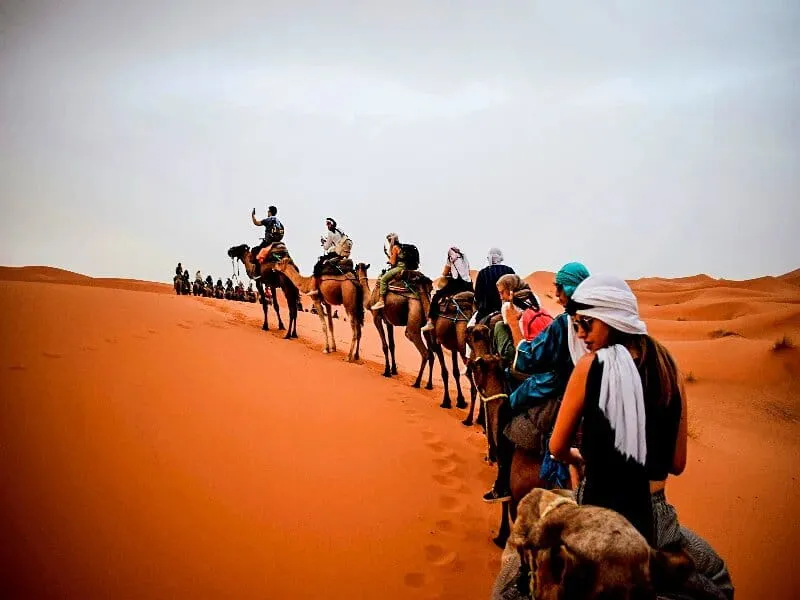
The Sahara Desert remains Morocco’s most iconic draw, and tours delivering this experience vary from budget group circuits to luxury private expeditions. Three to four-day desert tours from Marrakech cross the High Atlas Mountains via the Tizi n’Tichka pass, pass through Ait Benhaddou’s UNESCO-listed kasbah, traverse dramatic Dades and Todra gorges, and arrive at Erg Chebbi dunes near Merzouga for camel treks and Berber camp nights under extraordinary stars.
Shorter two-day Zagora routes offer accessible desert introductions for time-limited travelers. While Zagora’s dunes are smaller than Merzouga’s towering Erg Chebbi formations, the experience remains genuinely Saharan and far less exhausting than longer routes.
Coastal and Mountain Destinations
Essaouira’s blue-and-white Atlantic medina provides coastal variety within Morocco tours. The relaxed port town offers fresh seafood, art galleries, windsurfing, and a distinctly different pace from inland city intensity. Chefchaouen, the blue mountain city perched in the Rif range, has become one of Morocco’s most photographed places, its indigo-painted alleyways creating dreamlike settings that photographers treasure.
The High Atlas Mountains offer trekking adventures ranging from day hikes in Imlil village to multi-day ascents of Mount Toubkal, North Africa’s highest peak. Tours incorporating mountain experiences add physical challenge and Berber cultural immersion that purely urban itineraries miss.
Tour Duration and Structure Options
Short Tours (Three to Four Days)
Brief tours focus on specific experiences. Desert circuits, Marrakech city explorations, or Fes cultural immersions work well as standalone short experiences. These suit travelers combining Morocco with other destinations or those with limited vacation time wanting core Moroccan highlights without extended commitment.
Week-Long Tours (Seven to Eight Days)
Most first-time visitors find week-long tours provide satisfying introductions balancing depth with geographic variety. Typical seven-day itineraries combine Marrakech exploration with desert circuits or imperial cities routes, providing enough time to absorb each location without rushing.
Comprehensive Tours (Ten to Fourteen Days)
Extended tours covering Morocco thoroughly traverse the country from north to south, incorporating Casablanca, Rabat, Chefchaouen, Fes, Meknes, Volubilis Roman ruins, Merzouga desert, Dades and Draa valleys, Ait Benhaddou, and Marrakech within single comprehensive circuits.
These longer itineraries suit travelers with genuine passion for Morocco who want thorough exploration rather than surface-level introductions.
Choosing Between Group and Private Tours
Group tours combine individual travelers into parties of eight to sixteen participants following predetermined itineraries. The primary advantage is cost reduction of 30 to 50 percent compared to private options. Social interaction also appeals to solo travelers seeking companionship and shared enthusiasm.
Private tours provide flexibility, personalized pacing, and complete itinerary customization at premium prices. Families, couples celebrating special occasions, and travelers with specific interests or physical requirements benefit most from private arrangements.
Small group tours of four to eight participants offer genuine middle ground, combining reasonable costs with greater flexibility and personal attention impossible in larger groups.
Practical Planning Essentials
Best Seasons
Spring (March to May) and autumn (September to November) deliver ideal Morocco conditions with comfortable temperatures throughout the country from mountains to desert. These popular seasons require advance booking as quality operators and preferred riads fill weeks ahead.
Summer brings intense heat to inland cities and desert areas, though Atlantic coastal destinations like Essaouira remain pleasant year-round. Winter creates cold desert nights and occasional snow in mountain passes while desert days remain mild and comfortable.
Accommodation During Tours
Traditional riads represent the ideal Morocco accommodation. These converted historic homes feature central courtyards, intricate tilework, and rooftop terraces that provide genuine immersion in local architectural traditions. Quality riads in Fes and Marrakech fill quickly during peak seasons.
Desert tours use varying accommodation tiers from basic shared tents to luxury private camp suites with proper beds, linens, and sometimes en-suite bathrooms. Specify accommodation preferences clearly when booking to avoid disappointment.
Budgeting Realistically
Budget group tours cost approximately $50 to $80 per person daily with basic accommodations and larger groups. Mid-range tours averaging $100 to $180 daily offer comfortable riads and more manageable group sizes. Luxury private tours run $250 to $400 daily with premium accommodations and personalized service throughout.
Total costs for typical seven-day tours range from roughly $500 to $700 for budget options, $800 to $1,200 for mid-range, and $1,500 to $3,000 for luxury private experiences.
Respecting Moroccan Culture
Tours to Morocco succeed when travelers approach cultural differences with genuine curiosity and respect. Dress modestly in medinas and religious areas, covering shoulders and knees. Greet locals with appropriate Arabic phrases which earn immediate warmth and reciprocal openness. Bargaining in souks follows expected social rituals, but approach negotiations as friendly exchanges rather than adversarial contests.
Ramadan creates different tourism conditions with reduced daytime food availability but exceptional evening atmosphere as families break fasts with traditional foods and celebrations. Some tourists specifically time Morocco tours to experience Ramadan’s unique cultural character.
Finding Quality Tour Operators
Morocco’s tourism industry spans reputable professional operators and less scrupulous alternatives primarily interested in commission-based shopping stops. Research thoroughly using recent reviews on TripAdvisor, Google, and specialized travel forums.
Look for operators providing specific accommodation names rather than vague descriptions, detailed day-by-day itineraries explaining what’s actually included, and transparent pricing covering all fees. Be cautious of prices significantly below market rates, which usually indicate hidden costs or service compromises.
Licensing verification matters. Legitimate Moroccan tour operators hold registrations with ONMT (Office National Marocain du Tourisme) and provide documentation upon request. Direct communication during inquiry phases reveals professionalism and genuine interest in your specific travel preferences beyond simple transaction completion.
Conclusion: Key Takeaways
Tours to Morocco deliver some of the world’s most rewarding travel experiences when approached with proper preparation, realistic expectations, and the right operator selection.
Research operators carefully beyond surface-level website impressions. Recent reviews from verified travelers reveal actual service quality, guide expertise, and whether companies genuinely deliver promised experiences. The best operators demonstrate passion for Morocco beyond commercial motivation.
Choose tour duration matching your actual available time without overextending. A focused well-paced week exploring specific regions creates richer memories than rushed two-week circuits attempting to see everything superficially.
Match accommodation choices to your comfort requirements. Riads provide authentic experiences, desert camps create magical nights, and quality varies enormously between budget and mid-range options. Request specific accommodation details before booking.
Pack appropriately for Morocco’s temperature variations. Layers addressing cool mountain mornings, hot desert afternoons, and cold desert nights prove essential. Modest clothing respects cultural norms while facilitating more authentic interactions with locals.
Embrace the unexpected. Morocco’s greatest gifts often arrive unplanned, whether stumbling into a local wedding celebration, discovering a hidden courtyard cafe, or witnessing a moment of genuine connection across cultural differences. Tours provide the framework, but Morocco’s magic lives in spaces between scheduled activities.
Engage meaningfully with Moroccan culture rather than observing from a comfortable distance. Learning basic greetings, attempting mint tea ceremonies with hosts, and accepting family hospitality when offered creates connections that transform tours into genuine cross-cultural exchanges.
Book appropriately early for peak seasons, particularly for desert camp accommodations and quality riads in Fes and Marrakech. Leaving accommodation arrangements to the last minute during spring and autumn peak periods risks disappointment with limited availability.
Morocco rewards those who arrive curious, respectful, and genuinely open to experiences beyond comfortable familiarity. Tours to Morocco provide the ideal structure for this discovery, delivering a country that feels simultaneously ancient and alive, challenging and welcoming, familiar through reputation yet surprising in person.
