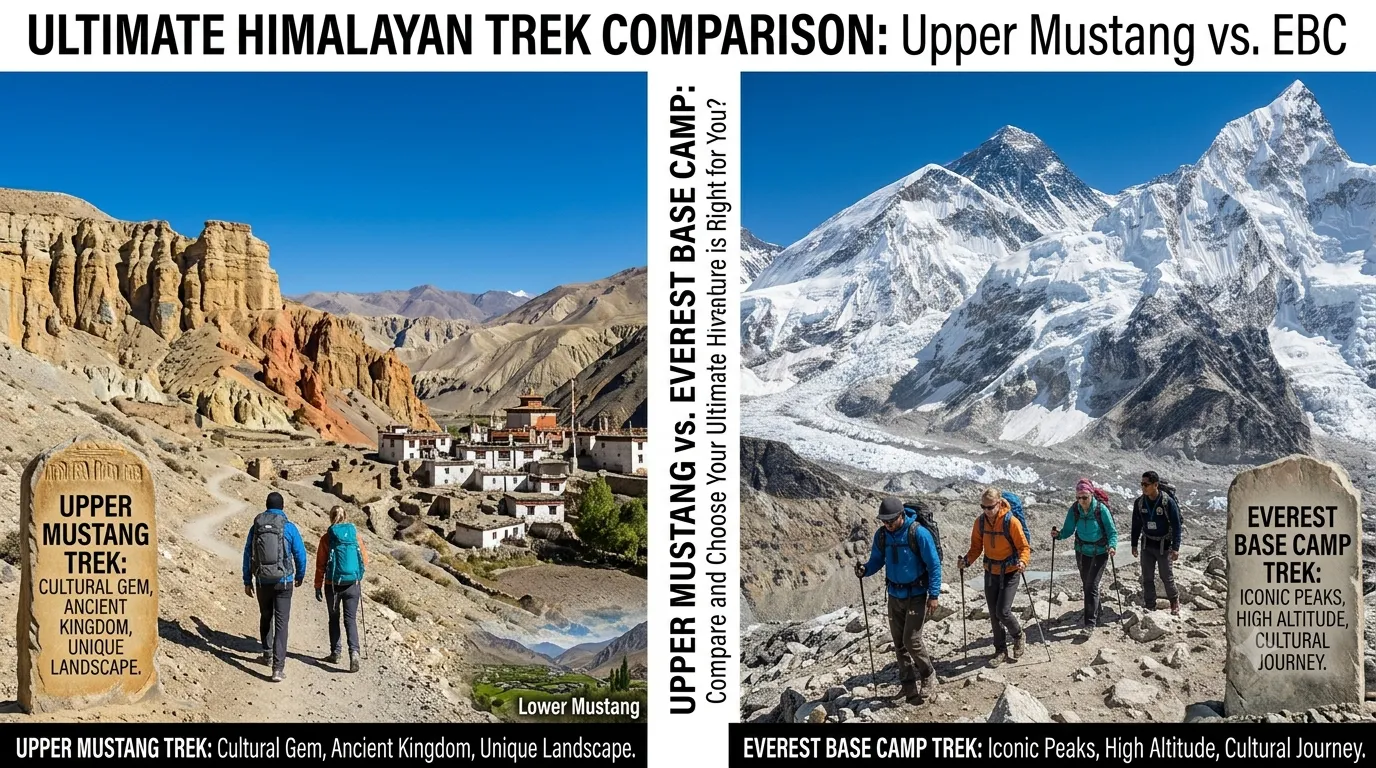
Nepal is home to some of the world’s most iconic trekking destinations, offering adventures that range from lush forests and alpine meadows to rugged mountain passes and ancient Himalayan kingdoms. Among the country’s most sought-after journeys, the Upper Mustang Trek and the Everest Base Camp Trek stand out for their unique landscapes, rich cultures, and unforgettable experiences.
While both treks showcase the beauty of the Himalayas, they offer completely different adventures. The Upper Mustang Trek takes travelers into the mysterious former Kingdom of Lo, a remote desert-like region rich in Tibetan Buddhist culture. Meanwhile, the Everest Base Camp Trek leads trekkers through the heart of the Khumbu region, providing close-up views of Mount Everest, the tallest mountain on Earth.
If you’re planning your next Himalayan adventure, this detailed comparison will help you decide which trek best matches your interests, fitness level, and travel goals.
Introduction to the Upper Mustang Trek
The Upper Mustang Trek is one of Nepal’s most fascinating cultural adventures. Often called the “Last Forbidden Kingdom,” Upper Mustang remained closed to foreign visitors until 1992, allowing its traditions and Tibetan heritage to remain remarkably well preserved.
Located in northwestern Nepal near the Tibetan border, this trekking route follows ancient caravan trails that were once part of the historic salt trade between Nepal and Tibet. The journey passes through dramatic canyons, colorful cliffs, centuries-old monasteries, cave settlements, and traditional villages before reaching the walled city of Lo Manthang.
Unlike many Himalayan trekking routes, Upper Mustang lies within the rain shadow of the Annapurna and Dhaulagiri ranges. As a result, the landscape resembles the Tibetan Plateau more than the lush green valleys often associated with Nepal.
Introduction to the Everest Base Camp Trek
The Everest Base Camp Trek is one of the world’s most famous trekking experiences. Every year, thousands of trekkers travel to Nepal to follow the legendary trail to the foot of Mount Everest.
Beginning with a thrilling mountain flight to Lukla, the trek follows the Dudh Koshi River through beautiful Sherpa villages, dense rhododendron forests, suspension bridges, and high alpine terrain. Along the way, trekkers visit iconic destinations such as Namche Bazaar, Tengboche Monastery, Dingboche, Lobuche, Gorakshep, Kala Patthar, and finally Everest Base Camp.
The trek offers unmatched panoramic views of Everest, Lhotse, Nuptse, Ama Dablam, Pumori, and numerous other Himalayan giants.
Landscape Comparison
One of the biggest differences between the two adventures lies in their scenery.
Upper Mustang Trek
The Upper Mustang region offers:
-
Dramatic desert valleys
-
Wind-eroded cliffs
-
Colorful rock formations
-
Deep canyons
-
Ancient cave complexes
-
Wide-open Himalayan plateaus
-
Snow-capped mountains in the distance
The landscape feels almost otherworldly, making trekkers feel as though they have entered another country.
Everest Base Camp Trek
The Everest region features:
-
Towering glaciers
-
Massive icefalls
-
Alpine forests
-
High mountain passes
-
Crystal-clear rivers
-
Suspension bridges
-
Glacial moraines
-
Iconic Himalayan peaks
For mountain lovers, few places rival the spectacular scenery surrounding Everest.
Cultural Experience
Upper Mustang Trek
Culture is the highlight of the Upper Mustang Trek.
The region remains deeply influenced by Tibetan Buddhism, with traditions dating back centuries. Visitors encounter:
-
Ancient monasteries
-
Buddhist chortens
-
Prayer walls
-
Traditional mud-brick villages
-
Monastic festivals
-
Tibetan architecture
-
Local royal history
Lo Manthang, the capital of the former kingdom, remains one of Nepal’s most culturally significant destinations.
Everest Base Camp Trek
The Everest region is home to the Sherpa people, who are internationally respected for their mountaineering expertise.
Trekkers experience:
-
Sherpa hospitality
-
Buddhist monasteries
-
Prayer flags
-
Mani walls
-
Mountain villages
-
Traditional teahouses
-
Local museums
Tengboche Monastery is one of the spiritual highlights of the journey.
Trek Difficulty
Upper Mustang Trek
The Upper Mustang Trek is considered moderately challenging.
Although the daily walking distances are manageable, trekkers should prepare for:
-
Dry climate
-
Dusty trails
-
Windy afternoons
-
Gradual elevation gain
-
Long hiking days
The highest elevation is approximately 3,840 meters at Lo Manthang, making altitude sickness less common than on Everest routes.
Everest Base Camp Trek
The Everest Base Camp Trek is significantly more demanding because of its altitude.
Trekkers reach approximately:
-
Everest Base Camp: 5,364 meters
-
Kala Patthar: 5,545 meters
The thin air makes hiking much more challenging, even for experienced trekkers. Proper acclimatization days are essential for a safe journey.
Best Time to Visit
Upper Mustang Trek
The best seasons include:
-
March to May
-
June to August
-
September to November
Because the region lies in a rain shadow, it remains one of Nepal’s few excellent trekking destinations during the summer monsoon.
Everest Base Camp Trek
The ideal trekking seasons are:
-
March to May
-
September to November
Winter is possible but extremely cold, while the monsoon season often causes flight delays and poor visibility.
Wildlife and Nature
Upper Mustang Trek
Wildlife sightings may include:
-
Himalayan blue sheep
-
Himalayan griffons
-
Golden eagles
-
Tibetan foxes
-
Rare medicinal plants
The region’s dry ecosystem is unlike anywhere else in Nepal.
Everest Base Camp Trek
The Sagarmatha National Park protects numerous Himalayan species, including:
-
Musk deer
-
Himalayan tahr
-
Danphe (Nepal’s national bird)
-
Snow leopard (rare)
-
Red-billed chough
-
Himalayan monal
Spring also brings colorful rhododendron blooms.
Accommodation
Both treks primarily use local teahouses.
Upper Mustang Trek
Accommodation typically includes:
-
Family-run lodges
-
Traditional guesthouses
-
Basic but comfortable rooms
-
Local home-cooked meals
Facilities become simpler in remote villages.
Everest Base Camp Trek
The Everest route offers:
-
Comfortable teahouses
-
Hot meals
-
Bakeries
-
Cafés
-
Wi-Fi in many villages
-
Hot showers (additional cost)
Because of its popularity, the Everest region generally has more developed trekking infrastructure.
Food Along the Trails
Both treks serve a variety of local and international meals.
Popular dishes include:
-
Dal Bhat
-
Fried rice
-
Vegetable noodles
-
Tibetan bread
-
Momos
-
Pancakes
-
Soups
-
Tea and coffee
Everest villages often offer larger menus due to higher tourism.
Permit Requirements
Upper Mustang Trek
Trekkers require:
-
Restricted Area Permit
-
Annapurna Conservation Area Permit (ACAP)
The restricted area permit is relatively expensive and requires trekking with a registered guide.
Everest Base Camp Trek
Trekkers need:
-
Sagarmatha National Park Permit
-
Khumbu Pasang Lhamu Rural Municipality Permit
Permit costs are generally lower than Upper Mustang.
Photography Opportunities
Upper Mustang Trek
Photographers enjoy:
-
Desert landscapes
-
Ancient monasteries
-
Traditional villages
-
Tibetan culture
-
Colorful cliffs
-
Dramatic sunsets
The unique terrain creates extraordinary compositions.
Everest Base Camp Trek
Photography highlights include:
-
Mount Everest
-
Ama Dablam
-
Khumbu Glacier
-
Kala Patthar sunrise
-
Prayer flags
-
Sherpa villages
-
Snow-covered peaks
The mountain scenery is among the finest on Earth.
Who Should Choose the Upper Mustang Trek?
This trek is perfect for travelers who:
-
Love history and culture
-
Prefer quieter trekking routes
-
Want unique landscapes
-
Enjoy photography
-
Wish to trek during the monsoon
-
Are interested in Tibetan heritage
Who Should Choose the Everest Base Camp Trek?
The Everest Base Camp Trek is ideal for travelers who:
-
Dream of seeing Mount Everest up close
-
Enjoy challenging high-altitude adventures
-
Want iconic Himalayan views
-
Appreciate Sherpa culture
-
Seek a world-famous trekking experience
Cost Comparison
Generally, the Upper Mustang Trek costs more because of its restricted area permit and mandatory guide requirements. However, transportation is usually by road or domestic flight to Jomsom.
The Everest Base Camp Trek typically has lower permit fees but includes flights to Lukla, where weather-related delays can occasionally affect itineraries.
Both treks can be customized with premium lodges, porter services, and private guides depending on your budget.
Safety Considerations
For both treks:
-
Trek with an experienced guide whenever possible.
-
Stay hydrated throughout the journey.
-
Acclimatize properly at higher elevations.
-
Carry suitable clothing for changing weather.
-
Purchase comprehensive travel insurance that includes helicopter evacuation.
Altitude sickness is a much greater concern on the Everest Base Camp Trek due to its significantly higher elevation.
Final Thoughts
Choosing between the Upper Mustang Trek and the Everest Base Camp Trek depends on the type of Himalayan adventure you seek.
If you’re fascinated by ancient kingdoms, Tibetan culture, dramatic desert landscapes, and off-the-beaten-path exploration, the Upper Mustang Trek delivers an unforgettable journey through one of Nepal’s most unique regions.
If standing beneath the world’s highest mountain has always been your dream, the Everest Base Camp Trek offers legendary scenery, vibrant Sherpa culture, and one of the greatest trekking experiences available anywhere on the planet.
Whichever adventure you choose, both treks showcase the incredible diversity of Nepal. From sacred monasteries and historic villages to towering Himalayan peaks and breathtaking valleys, each journey promises memories that will last a lifetime and a deeper appreciation for the natural beauty and cultural heritage of the Himalayas.
